
A TLD (Top-Level Domain), like .com, .net, or .biz, goes through a series of stages from the moment it is registered to when it expires and becomes available for others to register.
Understanding the domain lifecycle helps you manage your domains and avoid losing them.
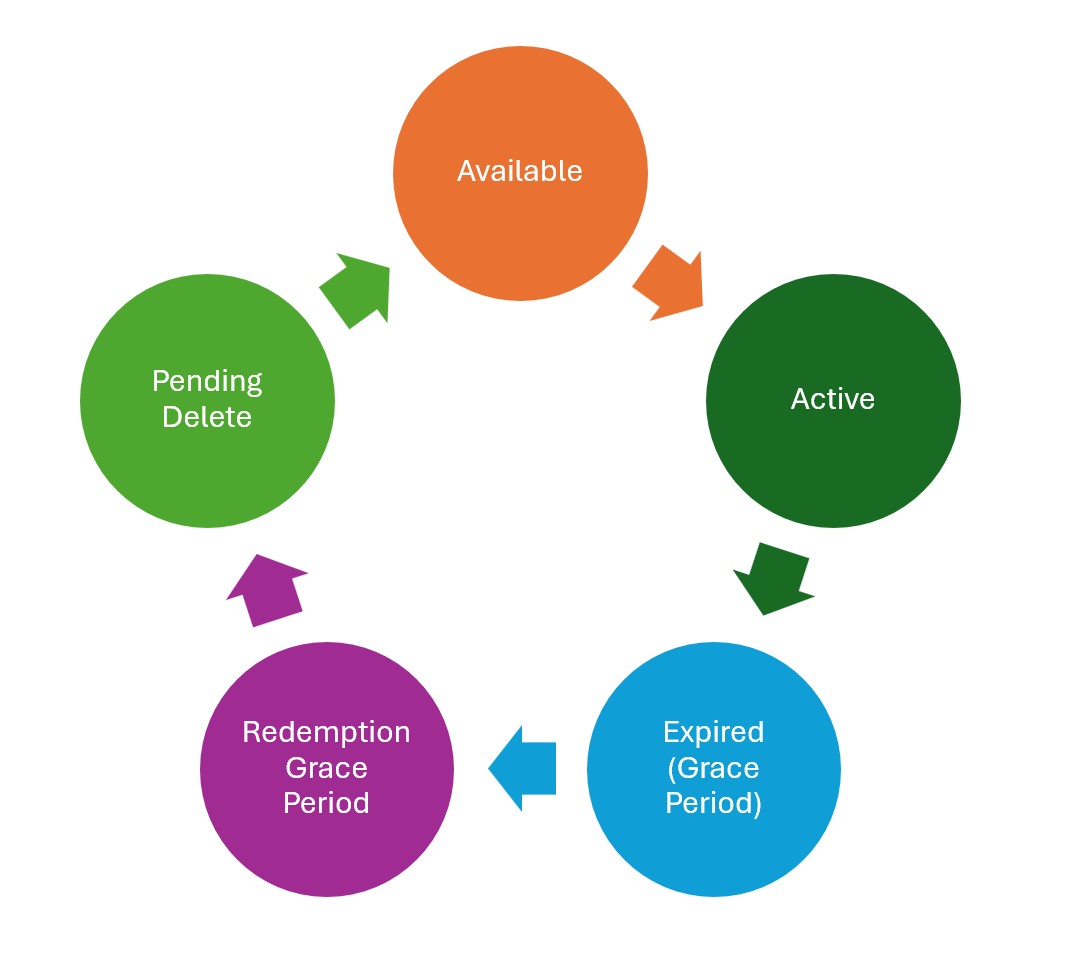
1️⃣ Available / Registration
The domain is available and can be registered by anyone.
Search your preferred domain name and pay the registration fee to secure it.
2️⃣ Active / Registered
Once registered, the domain is active and points to your website or services.
You must renew it periodically (usually every 1–10 years).
3️⃣ Expired (Grace Period)
If you don’t renew your domain, it enters the expired stage, which typically lasts for 30 days.
The website and email associated with the domain stop working.
4️⃣ Redemption Period (Redemption Grace Period)
Most TLDs have a 30-day redemption period after expiration.
You can still renew the domain, but additional fees may apply.
5️⃣ Pending Delete
If the domain is not renewed during the redemption period, it enters a pending delete stage (usually 5–7 days).
During this time, the domain cannot be renewed or registered.
6️⃣ Released / Available Again
After the pending delete period, the domain is released back to the public and anyone can register it.
💡 Key Tips:
- Always renew domains before they expire to avoid losing them.
- Be aware of redemption fees if you miss the renewal window.